Work with me
Counselling for people who are tired of coping alone
I offer relational psychodynamic counselling for people who appear capable on the outside but feel the emotional weight of that responsibility underneath.
Sessions are available in person in Loughton, serving Epping, Buckhurst Hill and surrounding areas, as well as online-therapy across the UK.
If you're not sure which format would suit you, you can find a simple overview on the Services page.
What you may be struggling with
Many adults I work with experience these difficulties quietly, while continuing to function highly in their lives.
You might recognise some of the following and more fully here:
Although much of my writing explores the experience of high-achieving women, I work with both women and men who recognise themselves in these patterns.

Self-doubt and imposter feelings
Feeling as though you don’t quite belong, even when you’re clearly capable
Regularly questioning yourself or replaying conversations and decisions
Finding it hard to take in praise or fully trust your own achievements
Holding yourself to high standards, where “enough” rarely feels settled
Feeling gently worn down by the effort of proving or holding it together
Often, alongside this, there can be a quiet sense of not quite feeling enough — even when you’re clearly capable. (I explore this more in why you might still feel like an imposter.)

Burnout and emotional exhaustion
Feeling persistently tired, even after rest
Finding it hard to switch off or quieten your thoughts
Feeling overwhelmed by everyday responsibilities
Noticing emotional flatness, irritability, or numbness
Feeling less connected to yourself than you once were

Relationships and boundaries
Finding it hard to say no, even when something doesn’t feel right
Feeling responsible for others’ feelings or comfort at your own expense
Noticing resentment, guilt, or self-doubt after setting (or avoiding) boundaries
Struggling to express needs clearly, for fear of conflict or disappointing others
Feeling less sure of yourself in relationships than you would like to be
Alongside these struggles, there’s often a quiet sense of wanting something to feel different. These patterns often sit alongside one another — holding things together, finding it difficult to ask for help, and feeling capable but not quite settled internally.
(You can explore these experiences further in the articles above.)


What you want instead
In therapy, many people discover they want a different way of relating to themselves — one that feels steadier, kinder, and less driven by pressure.
You may find yourself wanting to:
Feel less caught in overthinking
Trust your inner responses more
Feel steadier inside, even when things feel uncertain
Trust yourself without needing to get everything right
Show up as yourself, without performing or holding back
Have relationships where honesty feels safer
Say no without guilt and protect your energy
Feel enough, without needing to prove it
Underneath all of this is a wish to reconnect with yourself — to feel clearer, calmer, and more like you again.
Therapy offers a space to move toward this change without pressure or performance.
You can also explore the different ways of working together, including online and in-person sessions, on the Services page.
How I can help
As a relational psychodynamic counsellor, I work with you to understand the emotional and relational patterns that have developed over time — often quietly, and often in response to earlier experiences.
Our work pays attention not only to what you talk about, but also to what unfolds between us in the therapeutic relationship. This isn’t about being analysed or corrected; it’s about noticing emotional responses as they arise and making sense of them together.
Through this process, understanding becomes lived rather than purely intellectual. Long-held ways of coping can begin to soften, and new ways of relating — to yourself and to others — can gradually take shape.
The pace of the work is thoughtful and collaborative. Rather than offering quick solutions, I support you in developing insight that leads to meaningful, lasting change.
This approach is especially suited to men and women who think deeply, feel intensely, and are used to managing alone.
Many of the adults I work with recognise themselves in patterns like being “the capable one” or feeling they should already be able to cope.
You can read more about me and my background on the About page.
As this work unfolds, clients often describe feeling:
more grounded and less overwhelmed
kinder towards themselves
clearer about their needs and boundaries
less driven by self-doubt or perfectionism
more connected in their relationships
more like themselves again

How therapy with me works
The value of therapy lies in the depth and consistency of the work over time, rather than in advice, techniques, or one-off conversations.
If you’d like to get a sense of me before booking, you can also read more about me on the About page.
We would usually meet once a week for 50 minutes, at the same time each week.
Therapy is open-ended, allowing space to work at depth rather than rushing towards a quick outcome.
The consistency of the space is part of what makes the work effective.
FAQs at a glance
Sessions: Weekly, 50 minutes
First Session: 60-minute assessment
Investment: £70 per session (£80 assessment)
Location: In-person counselling in Loughton, serving Epping, Buckhurst Hill, Theydon Bois and surrounding areas, with online sessions available across the UK
How to start: Free 15-minute phone call
Who I work with: Adults feeling overwhelmed, burnt out, self-doubting, or stuck in repeating patterns
Tone of therapy: Warm, steady, relational, at your pace.
Commitment: No fixed number - we review together after 12 sessions
Confidentiality: Yes - with the usual professional safeguards
You might also have some practical questions about how therapy works — I’ve answered some of the most common ones here.
-
I offer relational psychodynamic counselling for people tired of coping alone, focusing on long-standing emotional and relational patterns rather than quick fixes.
-
The first session is a chance to begin gently. You can talk about what’s been weighing on you, or simply what led you to get in touch. You don’t need to have a clear story or know exactly what’s “wrong”. We start where you are, and take things at a pace that feels manageable.
-
Sessions last 50 minutes and usually take place once a week, at the same time each week. This regular rhythm helps create a sense of steadiness and continuity, which supports deeper reflective work over time.
-
Relational psychodynamic therapy is often open-ended, rather than time-limited. Some people come with a particular concern; others find their understanding deepens gradually as the work unfolds. We review things together along the way, without pressure to reach an endpoint quickly.
-
Many of the people I work with appear capable and accomplished, yet feel internally unsettled. This can show up as persistent self-doubt, imposter feelings, emotional exhaustion, people-pleasing, or difficulties in relationships — including the relationship with yourself. Often, there isn’t one clear problem, just a sense that something doesn’t quite fit.
Therapy can sometimes feel emotionally challenging, but it is held within a steady, supportive relationship that moves at your pace. -
This approach looks beneath the surface of current difficulties to understand longer-standing patterns — particularly how you’ve learned to relate to yourself and others. The therapeutic relationship itself becomes part of that understanding, allowing change to develop in a way that feels more rooted and lasting.
-
No. Many people begin therapy feeling unsure, confused, or unable to name what’s wrong. Part of the work is making sense of that uncertainty together. You don’t need clarity before you begin — it often develops slowly, as the therapy progresses.
-
Yes — I work with men and women across the UK via secure online sessions.
Online therapy follows the same weekly structure as in-person work, offering a consistent space to explore what’s happening beneath the surface.
If you’re unsure which format feels right, we can talk it through in a free consultation.
You can read more about how online-therapy works here.
Fees & practicalities
Questions about sessions, fees, and arrangements
-
My current fee is £70 per 50-minute session. Sessions are paid for on the day. If you have questions about fees, you’re very welcome to raise these during the initial call.
-
Yes. I offer a free 15-minute consultation to help us both get a sense of whether working together feels right. There’s no obligation to commit to therapy after this call.
-
I offer in-person sessions in Loughton, Essex, as well as online sessions across the UK. We can talk together about what feels most suitable for you.
-
I ask for 48 hours’ notice if you need to cancel or reschedule a session. Sessions cancelled with less notice are usually charged in full, as the time is reserved specifically for you.
-
I don’t currently work with private health insurance providers. If affordability feels like a concern, we can talk this through during the initial call.
If you still have questions or would like to talk things through, you’re very welcome to get in touch.
I offer both in-person sessions in Loughton and online therapy across the UK — you can find more detail on the Services page.
Kind Words from Clients
"Before working with Keeley, I felt like I was constantly performing — calm on the outside, spiraling inside. Our sessions gave me space to finally breathe, to feel seen without needing to explain everything. I’m learning to trust myself, not just manage the anxiety. It’s been life-changing in the quietest, most meaningful ways."
Andrea
Relational psychodynamic counselling client
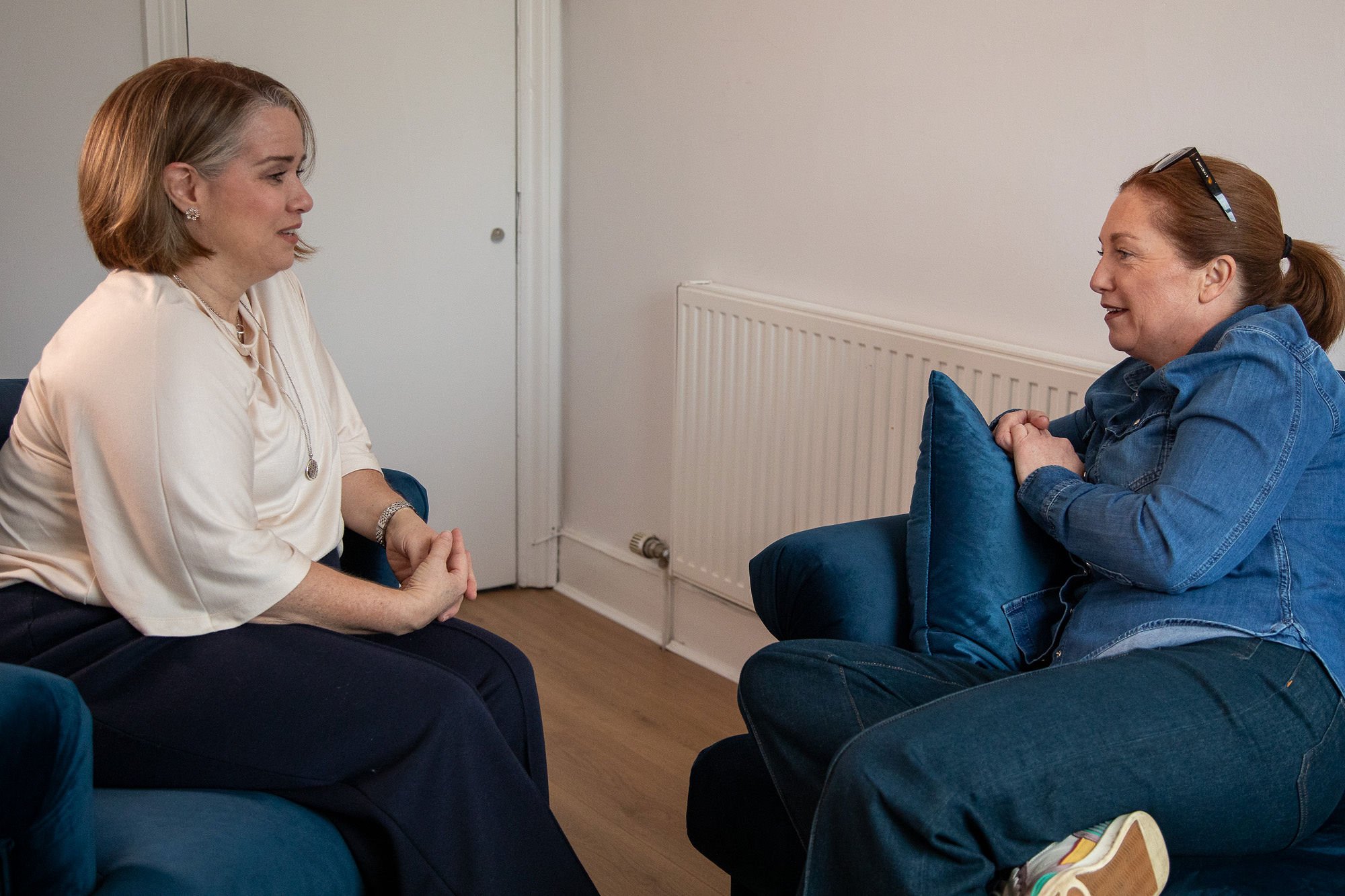
“When you understand yourself with compassion rather than criticism, something inside finally lets go.”
Ready to begin?
If you’ve recognised yourself in any of what you’ve read here — whether in the patterns above or in the experiences explored in the articles — therapy offers a space to understand this more fully.
If you’d like to explore whether working together feels right, you’re very welcome to book a free 15-minute call.
Or you can explore the Services page to get a sense of what might feel like the right starting point.